
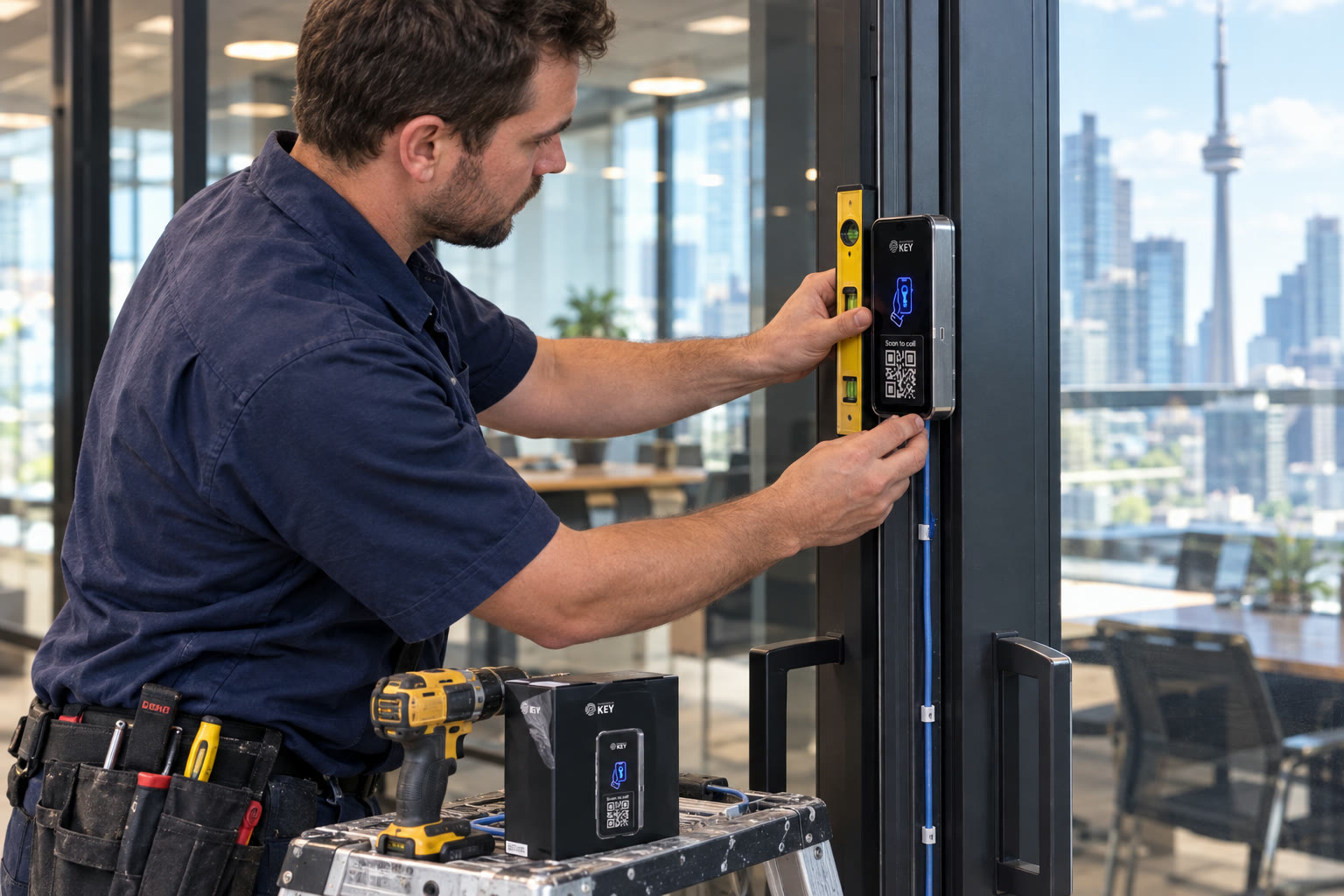
Smart lock installation · Toronto & GTA
Smart lock installation, starting with your door.
Start with the existing opening, the approving contact and the way people need to enter. The assessment defines the proposed reader, lock, power, connection and handover. Review that scope and its cost before agreeing installation work in Toronto and the GTA.
Prepare for the survey and handover
Who can show us the opening and explain the routine?
Tell us where the door is and what’s on it today. Cost comes after the check, before any work.
Share the work constraints
Describe access to the frame and finished surfaces.
Survey the installation route
Check locking hardware, power and proposed cable positions.
Arrange the handover scope
Agree interruption, first keys and administrator demonstration.
In short
What does smart lock installation involve?
For anyone adding phone access to a door
Installation joins the proposed reader, suitable electric locking equipment, supply and connection into an assessed entrance arrangement. It also needs an operating handover for the person managing credentials. The scope should identify retained equipment, necessary work and the agreed entry and exit arrangements for the property. A product component list alone cannot establish what an unfamiliar door needs.
Example, not a completed project
A new manager needs to issue the next key after the installer leaves.
Imagine an installation demonstrated with one authorized phone while the person who will manage later users has not tried the portal routine. Ask how that operating handover will be completed. The proposed equipment, an ordinary entry demonstration and the administrator's ability to maintain permissions are related but different checks. This is a sample acceptance question, not an unfinished customer job or a promise that a fitting visit automatically trains every future manager.
A clearer installation brief
Set the work boundaries before agreeing the appointment.
A good scope makes it possible to compare the physical work and the operating handover. These questions help identify the people and conditions that the installer needs to understand.
Prepare the premises discussion
- Identify the opening, present hardware and authorized property contact. Describe any known fault in ordinary operation instead of assuming new access equipment will repair it. A clear starting condition helps the proposal distinguish conversion work from separate door maintenance or investigation.
- Arrange the appropriate access to both sides of the entrance and relevant service spaces. Explain landlord, management or other approval boundaries. A photograph can introduce the job, while the actual survey still needs to establish concealed routes and equipment conditions.
- Discuss the ordinary arrival routine and any proposed interruption with the responsible party. Include users needing access during work and the contact handling their instructions. This enquiry cannot establish whether an unfamiliar property can close, remain unattended or lose a current entry route.
Review the proposed completion
- Look for retained and added hardware, power and cabling work, the chosen connection and explicit exclusions. Ask how the proposed arrangement will be explained at the opening. A list of supplied components should not conceal a necessary alteration that remains outside the agreed scope.
- Arrange the credential administrator's walkthrough and the intended first-user instructions. Have the operating contact understand how a permission is issued and withdrawn. Keep an untested feature or unavailable case recorded rather than extending one successful phone entry to the whole access routine.
- Keep the scope, continuing charges, help contacts and agreed fallback with the handover information. Identify who follows up a physical issue, connection question or permission change. The property should be able to maintain the arrangement without reconstructing an informal conversation with the fitter.
The installation sequence
Survey, configure, demonstrate.
A reader that works for the installer once is a starting point. Acceptance should include the person who will actually maintain access afterward.
01Confirm the opening and work scope
Record the current latch, frame, release controls and ownership permission. Locate an appropriate power arrangement and cable path, then discuss the intended Wi-Fi or LTE option. The job scope should distinguish equipment supplied from other work required on the entrance.
02Set up the intended permissions
Identify regular users, occasional visitors and the administrator for each site. Decide which doors and windows belong to each group before issuing keys. Do not turn a demonstration credential into a permanent unrestricted access arrangement by default.
03Practise the handover cases
Have the responsible user demonstrate regular entry, a guest permission and removal of an old key. Review what to do with an unavailable phone, lost card, connection interruption and power loss. Document the actual fallback and the work or continuing costs included in the proposal.
The source guides describe SmartphoneKey components and administration. The installation worksheet explains scope and handover questions; it is not a fixed-duration promise, wiring instruction or approval of a particular entrance.


Prepare the starting condition
Show what is fitted, what works and what should improve.
Walk through the normal arrival with the responsible property contact. Point out the present release and any known issue with closing or operation, then identify the relevant supply and equipment spaces. The survey should separate retained parts, new work and conditions needing further investigation. Include the people who can approve access arrangements during the proposed work and accept the operating handover afterward.
Is it the right fit?
Can the work be assessed and handed over clearly?
Useful when the responsible contacts can participate
- You want it done once, wired properly, with the exit sorted.
- You want a clear cost before anything is drilled.
- Several people need keys from day one.
Resolve approval and equipment dependencies first
- You want a battery lock you can fit yourself.
- You rent and the owner hasn’t approved changes to the door.
Before an installation is accepted
Know what the job includes and who takes it over.
The visible reader is part of the work. The proposal should also explain the physical arrangement, ordinary operation and responsibility for later access changes.
What must be known before an installation date is promised?
The door condition, authorized scope, hardware and cable work need assessment. Also establish who can provide access for the job. Timing should follow those details rather than a generic claim that every entrance takes the same amount of work.
Should the current entry method stay available during work?
Agree the transition with the responsible property contact. The arrangement depends on the opening and occupancy. An installation plan should explain how authorized people will reach the property while their normal entrance is being changed.
What is a useful administrator handover?
The person managing access should be able to issue an appropriate credential, select its authorized doors and withdraw permission. They should understand which changes are manual and which external software connections have not been verified.
Do tenants need approval before the survey becomes work?
Confirm who can authorize hardware alterations. A tenant or suite manager may need the landlord involved, and common-building equipment has separate responsibility. An enquiry does not establish permission to modify the opening.
How should fallback entry be demonstrated?
Ask for the specific agreed arrangement, including the effect of an uncharged phone and the selected lock’s power-loss behaviour. A description of a possible card option is not a demonstration that every outage has been covered.
What costs should be explained before accepting the proposal?
Include the reader, retained or new locking hardware, supply and connection work, credentials and continuing package requirements. Compare the complete installed scope; a device-only number does not describe the entire job.
What if we discover a door problem before the fitting visit?
Describe the behaviour to the responsible assessor and ask whether investigation or corrective work changes the proposed scope. A new reader does not establish that an existing latch, alignment or closing fault has been resolved. Keep the starting condition visible before accepting work or treating the installation date as a promise about an unexamined assembly.
Can a working reader demonstration finish the administrative handover?
It shows that interaction in the demonstrated arrangement. The future administrator still needs to understand the intended issuing, change and withdrawal routine, its responsibilities and any unresolved requirements. Agree how that operating part will be explained rather than assume the person managing later users learns it from watching one credential open the entrance.
Next step
Book the door check.
Tell us where the door is and what’s on it today. Cost comes after the check, before any work.
Request a door checkRequest a complete fitting and handover scope
Separate equipment, retained parts, lock work, power, cable and connection requirements. Include credential setup, user instruction, administrator handover and continuing package costs. Record excluded work and unanswered site conditions before installation is agreed.
For the Toronto/GTA survey, nominate the premises contact and arrange authorized access to the door and relevant equipment spaces. Bring ordinary operating hours and any known fault description. Timing and interruption follow the assessed scope; this preview reserves no installation date.