
Intercom systems · Toronto & GTA
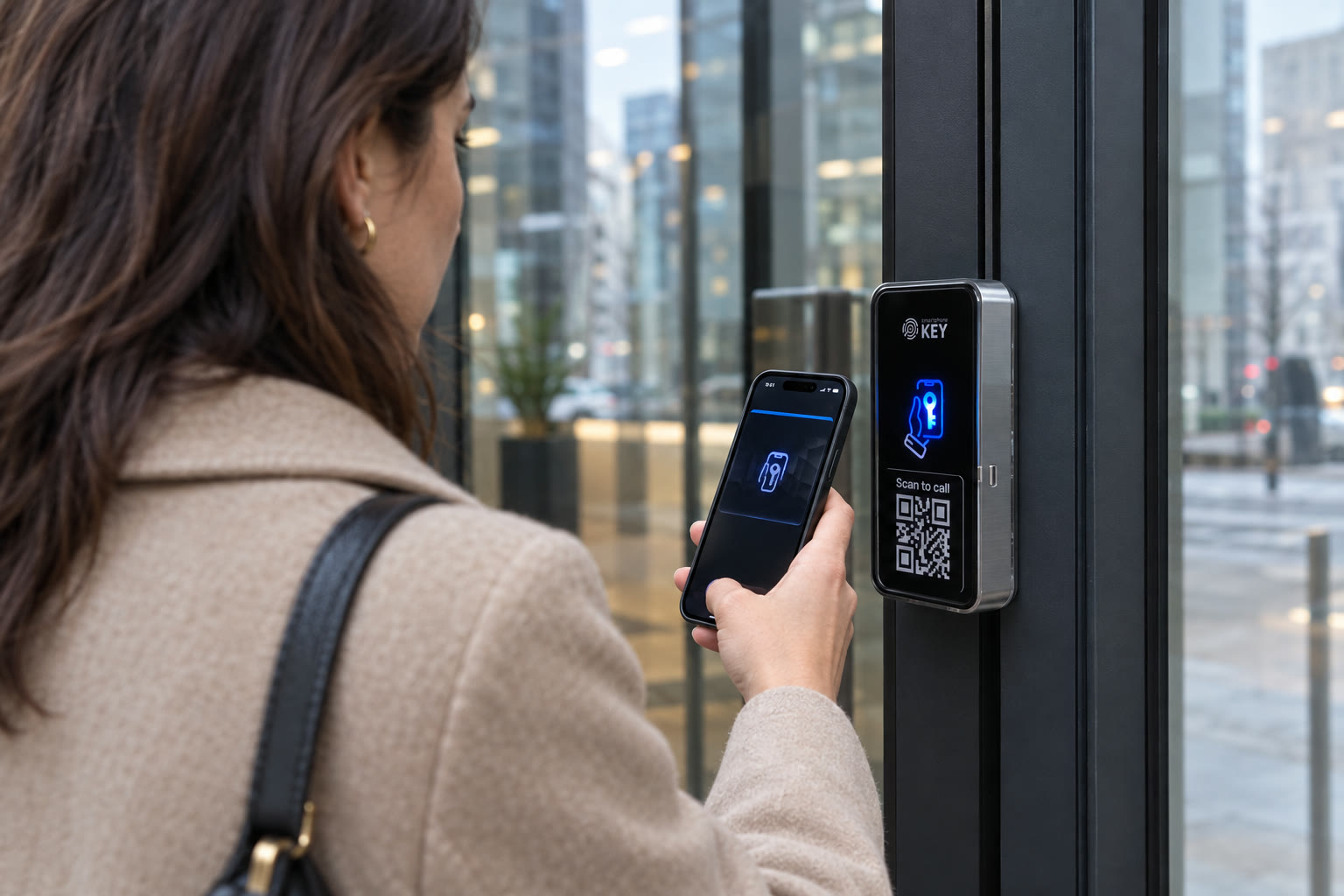
An intercom on the reader. Visitors scan to call.
Give visitors a documented QR-and-phone route to call an agreed recipient. Regular users can use supported Wallet keys or NFC cards. We assess the entrance and existing equipment before agreeing the installed arrangement in Toronto and the GTA.
Make the first arrival easier to follow
Where do visitors arrive, and who should respond?
Tell us about the door visitors use and who answers. The door check comes first; cost follows.
Walk through visitor arrival
Explain who receives calls and how guests find them.
Assess the calling entrance
Review reader position, connection and alternative admission.
Plan the recipient setup
Agree responsibilities, installed equipment and continuing charges.
In short
How does a QR intercom work?
For buildings, offices and businesses with visitors
SmartphoneKey's visitor route starts with a phone camera scanning the reader's QR code to place a call without installing an app. The property needs to arrange the intended recipient and explain what a visitor should do when that person cannot respond. Regular credentials and a visitor request serve different purposes, even where they relate to the same assessed entrance.
Example, not a completed project
A booked visitor finds the entrance while the host is unavailable.
Imagine an expected visitor reaching the correct reader while the host cannot respond immediately. The calling interaction does not settle the property's next instruction. Discuss how the visitor seeks assistance and which agreed contact owns that situation. This is a sample arrival to review, not a call record, a guarantee of automatic forwarding or permission for an unanswered visitor to enter.
A visitor-first comparison
Join up the directions, the request and the response.
A different entrance interface should be understandable to the people arriving. Use these questions to compare the proposed routine with the equipment and reception arrangements you already have.
Make the outside steps understandable
- Identify the public opening in appointment directions, especially where several entrances or businesses share one address. Explain the authorized route rather than direct a new visitor through a convenient staff area. A working reader cannot correct instructions that brought the person to the wrong door.
- Review the documented camera-and-QR interaction with somebody unfamiliar with the premises. Ask what they would see and who should respond. Familiar staff may know their way around without noticing that the new arrival instructions leave an important step unexplained.
- Agree assistance for a person unable to use the expected visitor device or interaction. Name the actual property arrangement rather than assume an unverified fallback feature is included. That question belongs in the comparison before the old arrival route is changed.
Make the response manageable
- Identify the recipient and how expected absence or reception hours affect arrivals. A visitor call is not evidence that someone is continuously available. Give the person maintaining instructions a clear responsibility when staffing or the destination inside the property changes.
- Decide when a planned visitor needs an approved guest credential instead of a new conversation on each arrival. Match the permission to the purpose and intended doors. Avoid converting an unanswered request into an unrestricted permanent key simply to remove an immediate inconvenience.
- Keep the existing panel, release, connection and indoor equipment visible in the proposal. Ask which parts stay and what changes for regular users as well as visitors. Compare instructions, handover and continuing charges with the physical work so the complete arrival arrangement can be understood.
Follow the call rather than the cable
Make the first visit understandable.
A QR calling route changes how a visitor requests attention. Compare that complete interaction with the existing panel before deciding what equipment can be removed.
01Recognize the entrance
A first-time visitor needs to identify the intended opening and the reader’s QR code. Explain any separate common lobby on the route. The documented calling method begins with the visitor’s phone camera rather than an assumed indoor handset arrangement.
02Reach the appropriate person
Choose who is responsible for answering requests and how absence is handled. SmartphoneKey describes calling without a visitor app installation. That capability does not establish reception coverage or an automatic decision to admit everyone who calls.
03Distinguish admission from a permanent key
A caller asking to enter is different from a person who already holds a credential. For a known recurring or time-bounded visit, consider whether an appropriately limited guest permission serves the purpose. Keep the recipient’s decision and the administrator’s issuing process clear.
The product materials document QR visitor calling without an app installation. The reception questions below help plan a property-specific arrival; they do not supply answering staff, confirm old handset compatibility or promise that every visitor can use one method.
Where it fits
Property guides.


Walk the visitor's route
Look from the pavement to the person answering.
Show where an unfamiliar visitor should go and how they find the entrance. Describe the current calling equipment and the people expected to respond. The assessment also needs to establish the release, supply and proposed reader connection. Discuss instructions and assistance for someone unable to use the expected phone route. A calling feature becomes useful through an agreed arrival process, not simply because a QR code is visible at the door.
Is it the right fit?
Can the property support the visitor routine it chooses?
Useful with clear directions and accountable recipients
- You want visitors handled at the door without a wired buzzer panel.
- Residents or staff should open the door with their phones.
- You want recorded credential activity alongside an agreed visitor-response process.
Confirm the required panel and response functions
- You need a voice panel with buttons for every unit.
- You need the intercom tied into another property system. That isn’t confirmed.
Before the first unfamiliar visitor
Make directions and responsibility clear.
Compare the experience outside the door with the response expected inside. Keep the visitor's request distinct from a continuing permission to enter.
Will visitors use the same controls as a wired panel?
Not necessarily. The documented route starts by scanning the reader’s QR code with a phone. Review the actual instructions and recipient experience rather than assuming every familiar handset or panel function carries over.
What about a visitor unable to use a phone camera?
Plan a practical arrival alternative with the property operator. The QR route depends on a suitable visitor device. Do not turn the presence of the feature into a claim that every possible visitor can use it.
Does a call grant ongoing access?
A visitor request and a managed credential have different purposes. Decide who may admit a visitor and when a separate guest key is appropriate. There is no reason to issue a permanent unrestricted credential simply because someone arrived once.
Can the current release wiring remain?
The existing equipment and proposed reader-to-lock arrangement require assessment. A different calling method does not prove compatibility with an unidentified panel, handset or release circuit. Ask for the retained parts to be named in the scope.
Are call records and entry records interchangeable?
No. Door activity information concerns recorded access events, while a visitor conversation is a different interaction. Do not describe the access log as a complete archive of every conversation or a record of everyone inside.
What should be included in an interruption plan?
Review what happens if the recipient cannot answer, the expected connection is unavailable or entrance power fails. Those are distinct situations. Agree the property’s actual response rather than promising universal offline calling or reception.
Can a regular contractor use an agreed guest key instead of calling each time?
Discuss the contractor's authorized purpose, doors and visit limits with the person approving access. A documented guest permission can support a planned visit, while a caller without one follows the agreed recipient route. Confirm the intended issuing and change process rather than assume the contractor should receive a continuing staff credential.
What if different entrances lead to different organizations?
Explain which destination each proposed arrival point serves and who can approve work there. Ask how visitors receive the correct directions and reach the agreed recipient. One street address or one property contact should not be treated as proof that every entrance has the same calling arrangement or authority.
Next step
Start with your entrance.
Tell us about the door visitors use and who answers. The door check comes first; cost follows.
Request a door checkCompare the complete arrival arrangement
Identify the proposed visitor interaction, public opening, recipient responsibilities and equipment retained or replaced. Include release, power and connection work, instructions, handover and continuing costs. Keep an essential handset or answering feature explicit until confirmed for this configuration.
For the Toronto/GTA discussion, arrange a contact who can show the outside approach and explain the current receiving routine. Bring typical arrival situations without private phone directories. This preview schedules no test call and reserves no installation visit.