
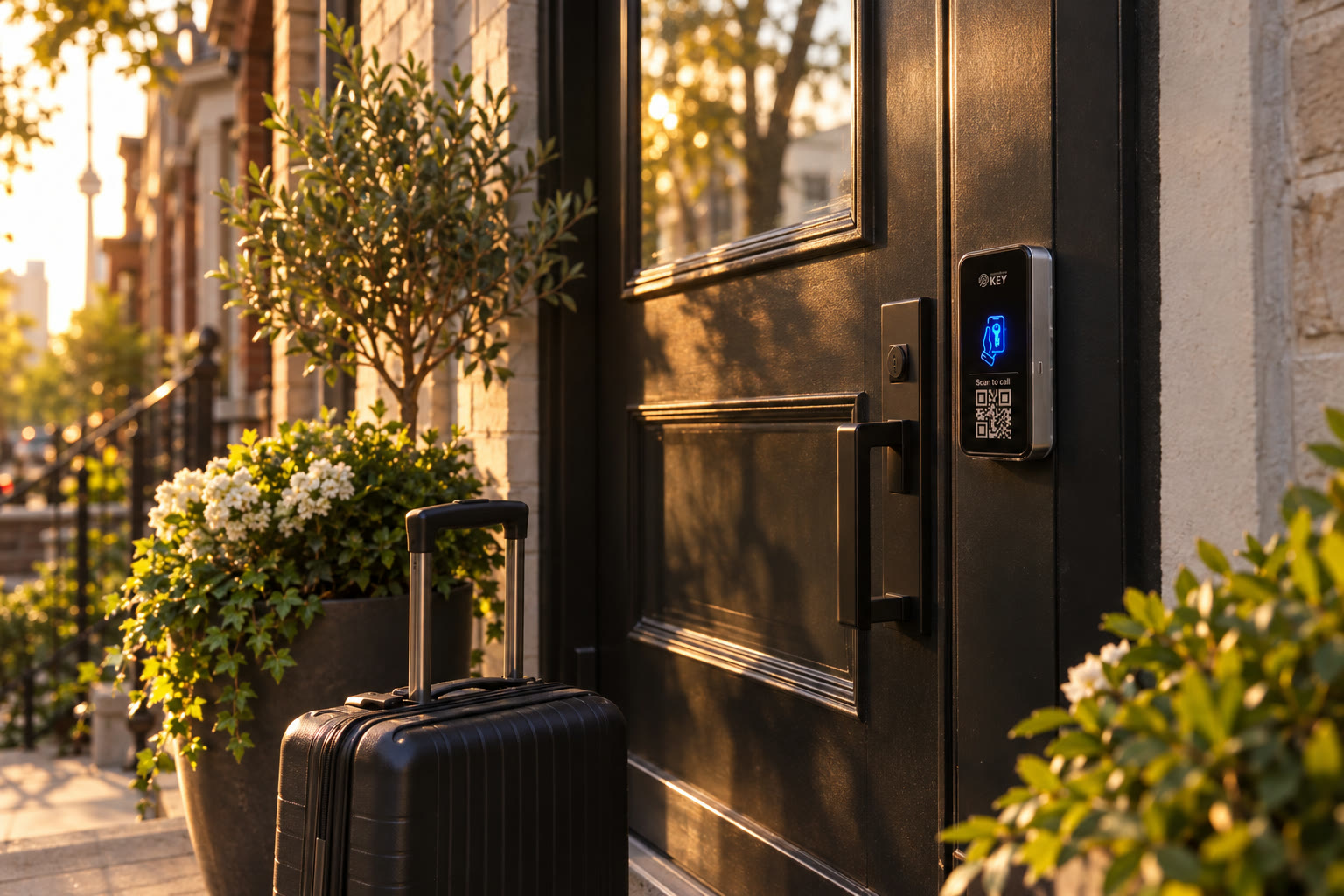
Vacation rental smart locks · Toronto and GTA
Smart locks for rentals. Permission for each stay.
A holiday property changes hands more often than a household door. Give each authorized visit a clear beginning, ending and responsible manager, with the physical entrance assessed before equipment is chosen.
Plan access between stays
Who manages the guest arrival and the next changeover?
Describe the rental entrance and how guests receive entry instructions. Include any common building door on the route.
Describe the stay pattern
Include check-in, turnover and property approval needs.
Review the rental entrance
Check equipment and arrangements for a refused arrival.
Agree the host routine
Cover guest windows, cleaner access and continuing charges.
The rental decision
Control the permission, not the booking calendar.
A vacation rental smart lock enquiry can describe several very different products. SmartphoneKey uses a reader, documented phone or NFC-card credentials and suitable electric locking hardware. Its guest permissions can have a start, finish and limit on uses. Those capabilities let a manager plan a visit; they do not establish an automatic connection to a reservation service. Confirm both the guest method and the work required at the actual door.
A changeover has separate jobs
Three permissions to keep apart.
The property manager
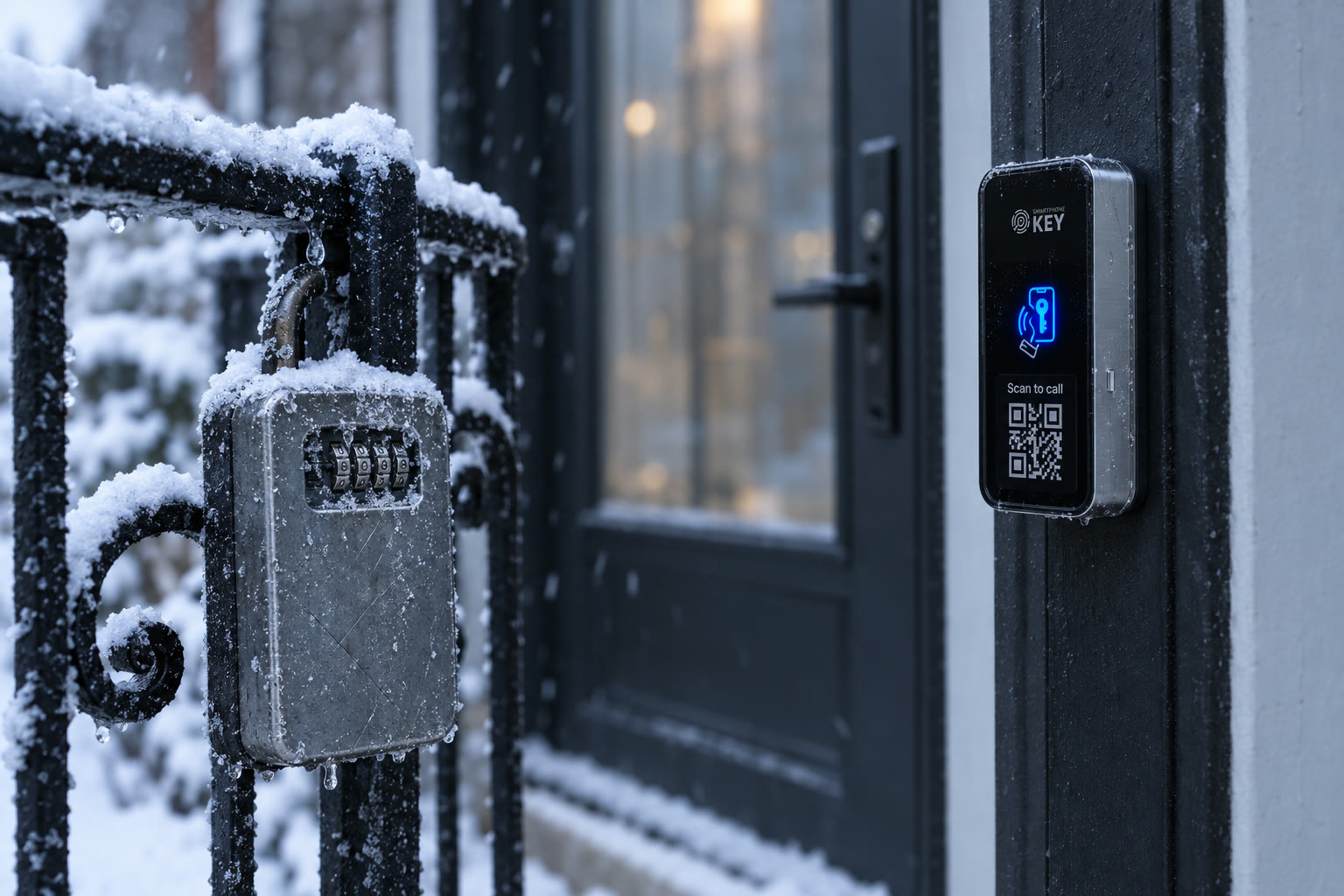
Keep the authority to change access with a named person. That person needs a dependable way to learn about cancellations and extensions. Moving from a borrowed metal key to a digital credential does not remove the job of deciding whether a visit is still authorized.
When comparing arrangements, include the problem you want to solve: collecting keys, coordinating an arrival, limiting a service visit or understanding which credential was used. A product chosen for one problem may not automatically solve the others.
The approved guest
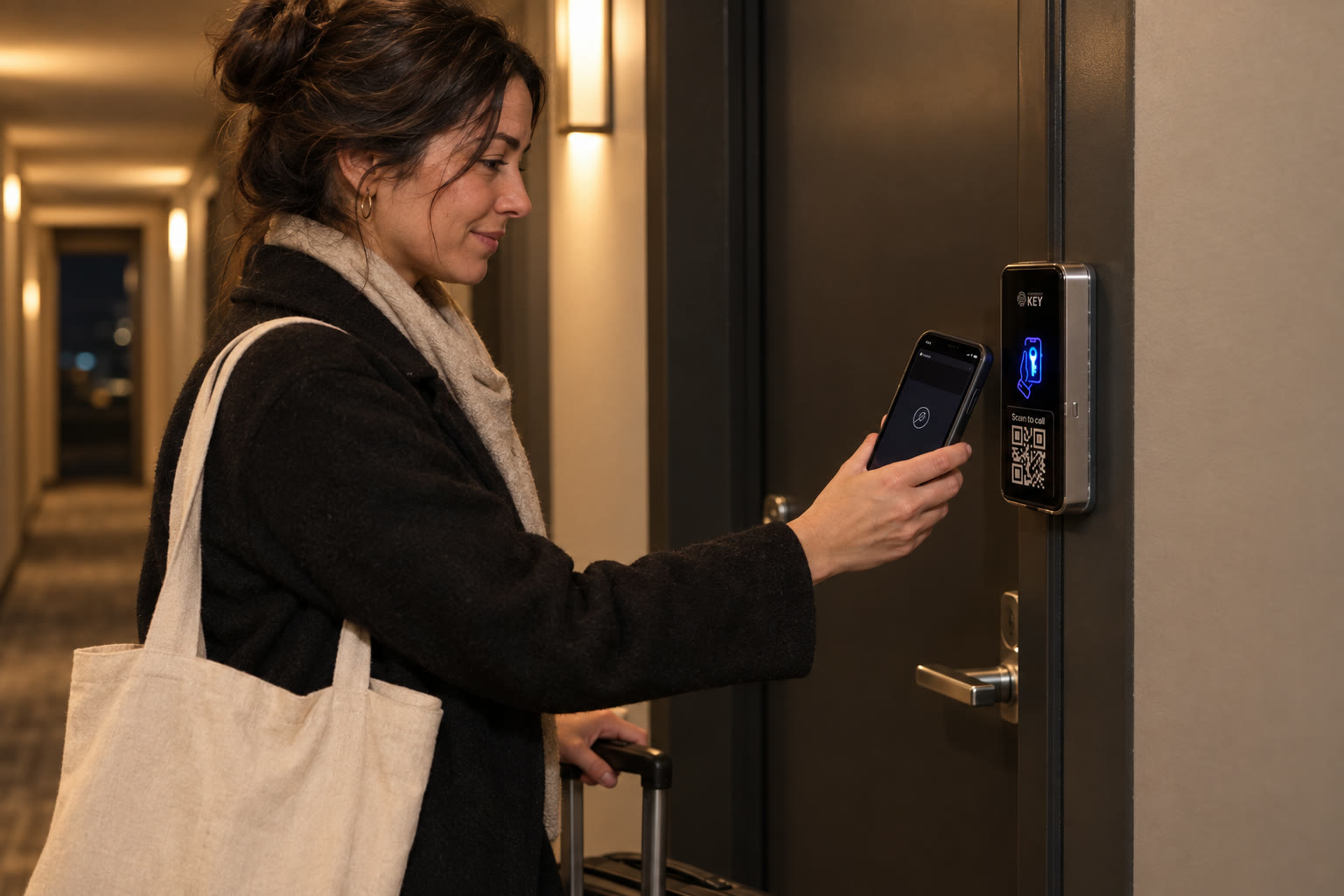
Write the entry instructions for the actual credential and entrance route. Explain when the permission begins and ends, which door it covers and who handles an arrival problem. Do not advertise a familiar keypad code if that function has not been confirmed for the equipment being proposed.
For a property inside a managed building, treat the common entrance and the private unit separately. A host may be able to grant permission at one door without having authority to change the other. Work through the whole route before promising a single method of entry.
The turnover team
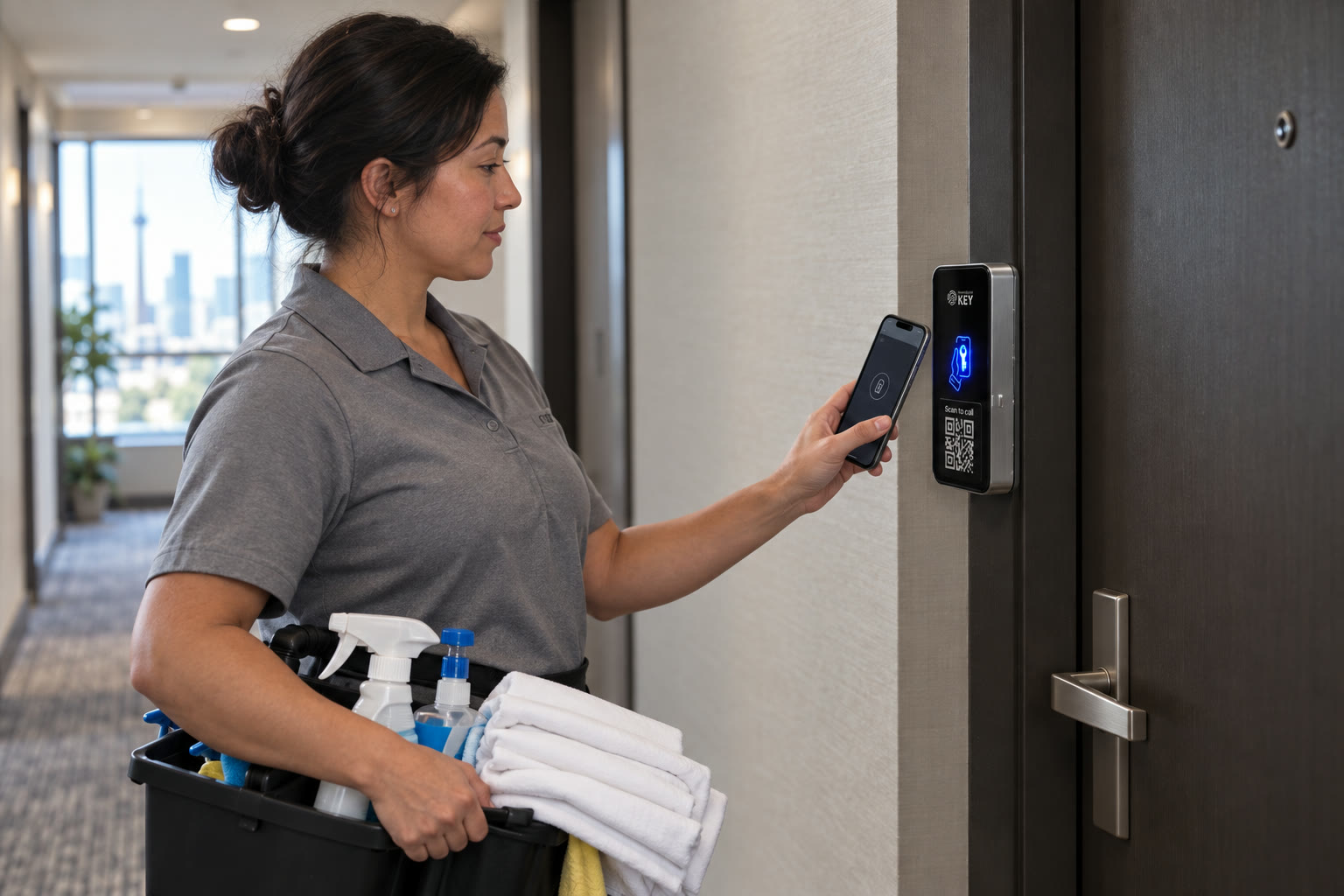
Cleaning, inspection and maintenance are visits with their own reasons and windows. Issue the permission appropriate to that job rather than leaving the departing guest credential in service. Decide who changes the cleaner window if the guest leaves later than expected.
Ending a credential is not proof that a room is empty, cleaned or ready for the next stay. Those decisions remain part of property management. An access event can inform the review, but it should not replace the actual handover process.


Before replacing the lock
Budget for the entrance, not a device photograph.
What the door assessment establishes
Identify the existing latch, frame and any powered release. Ask where a reader could sit, how wiring reaches the lock and supply, and which Wi-Fi or LTE arrangement suits the entrance. A standard mechanical lock does not establish that the door is ready for a powered reader installation.
Include the intended exit operation and the response to an outage. The installer should explain the actual installed arrangement rather than describe one lock type as suitable for every rental.
What belongs in the proposal
Compare supplied equipment, retained hardware, conversion work, credentials, connection requirements and any continuing package costs. Ask how first users are instructed and what the responsible manager must do afterward.
Timing follows the assessed work and property permissions. A door already fitted with suitable powered hardware presents a different job from an entrance requiring lock and cable work. No universal completion time or fixed price is promised here.
Practical answers
Questions between one stay and the next.
Can a guest permission end at checkout?
SmartphoneKey documents an expiry time for guest keys. Match it to the authorized visit and agree who updates it after a legitimate extension. Changing a reservation somewhere else does not prove that the door permission changed too.
Can several guests use the same permanent credential?
Consider the accountability and removal problem before choosing that arrangement. A credential associated with an authorized visit is easier to review than an unrestricted key circulating between unrelated stays. Confirm the supported issuing method and any package conditions.
What happens if a guest has a flat phone?
Plan an actual fallback for that property before a guest relies on the entrance. Do not promise unlocking with a dead phone. An NFC card can be an alternative credential, but the manager still needs a practical way to make an agreed alternative available.
Will power loss leave the entrance locked?
That depends on the installed locking hardware and its configuration. A magnetic lock releases when power is removed, while electric strike behaviour depends on the selected type. Ask the assessor to explain authorized entry, safe exit and any backup provision for this opening.
Who can inspect the entry information?
Make that responsibility explicit in the management arrangement. SmartphoneKey describes activity and administrative audit records. Limit administrative roles deliberately and explain how records will be used; a door event is not a complete account of a guest’s activities.
Does a digital credential remove the need for permission to alter the property?
No. Involve the person who can authorize the work. A tenant, unit owner and building manager may control different parts of the entrance route. The access product does not establish approval for a particular rental use or for changes to shared equipment.
How do we assess security without broad promises?
Ask which doors the credential permits, when it works and how it can be withdrawn. Review lost credentials and administrator responsibilities. Do not substitute an undefined security label for the actual installed hardware and operating process.
Can this be used across different booking platforms?
The host can evaluate guest permission management independently of where a stay was booked. No automatic booking, payment or calendar integration is established here. Keep issuing and changing permission with the responsible manager until a specific connection is verified.
Next step
Show us the whole guest route.
Include the common entrance, the rental door and the people managing turnover. Assess the work and complete cost before selecting the entry arrangement.
Request a door checkCompare the whole changeover arrangement
Ask the proposal to identify the guest route from the outside approach to the private rental entrance. Record who controls each opening and which equipment stays, changes or remains outside the project. Include the assessed release, reader, supply, cabling and connection rather than compare only a visible device. Agree the supported guest method and instructions for someone arriving without the expected credential. Keep a cleaning visit and maintenance appointment distinct from the guest's permission. Explain who learns of a cancellation or changed arrival and who applies any required access change; a time limit does not establish calendar synchronization. The handover should make issuing and withdrawal understandable to the person managing turnover. Include an agreed assistance and fallback arrangement, continuing charges and any unverified booking-platform requirement. Record an unanswered condition before accepting the proposal instead of treating one successful demonstration as the whole rental process.
For a Toronto or GTA property discussion, arrange the contact who can show the rental entrance and relevant service spaces. Bring a sample arrival, checkout and cleaning routine without personal guest records. Involve the responsible common-door party where the route is shared. Assessment establishes the proposed work and appointment arrangements; this preview does not reserve a conversion between bookings or promise uninterrupted guest access.