
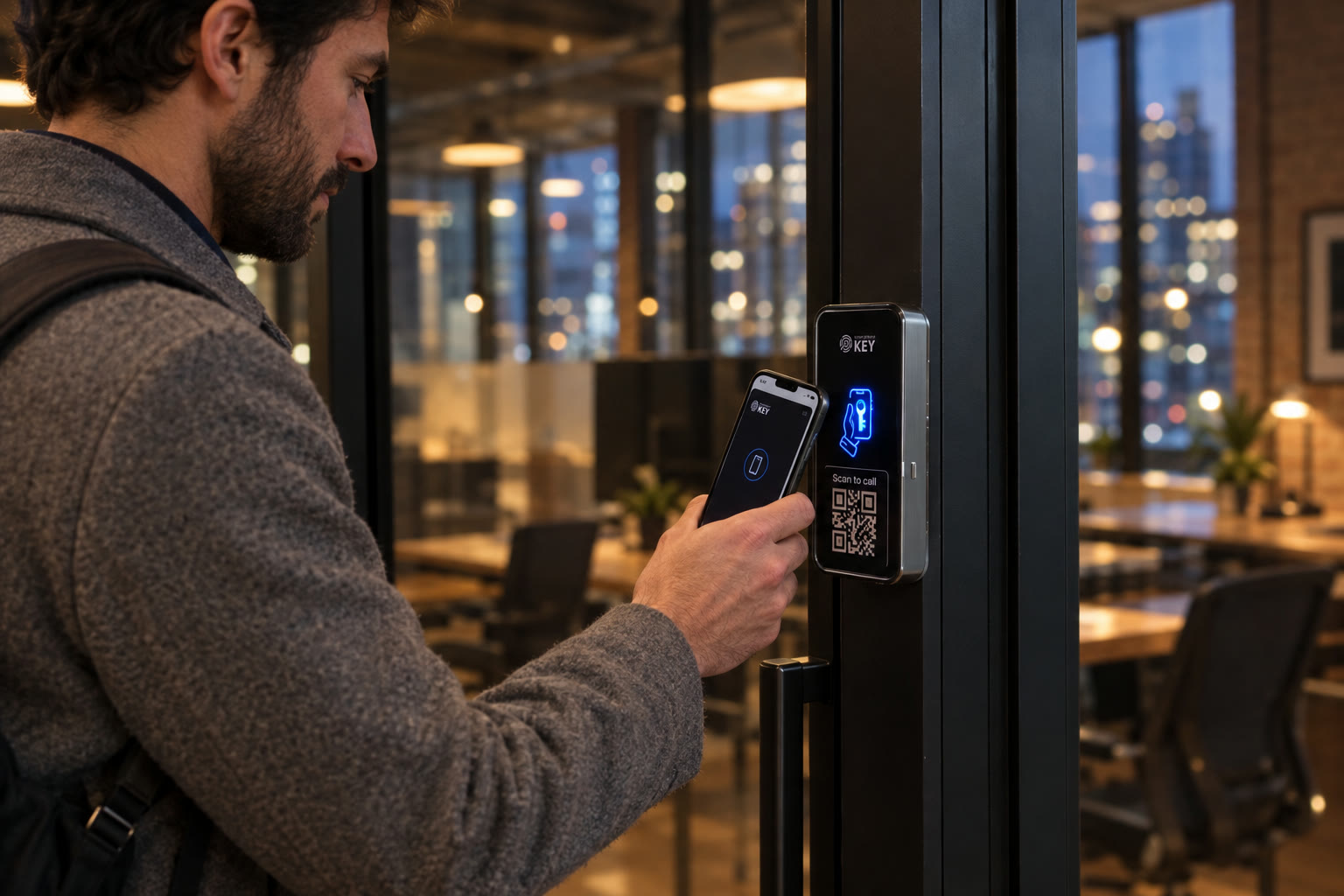
Electric strikes & magnetic locks · Toronto & GTA
Electric strikes and mag locks, opened by a phone tap.
The reader recognizes an authorized credential; suitable locking equipment releases the opening. We assess the latch, frame, supply and way out before proposing an electric strike or magnetic-lock arrangement for the entrance.
Bring the frame into the conversation
What does this door need to release and close properly?
Tell us what’s on the door today. The door check decides the lock; cost follows, before any work.
Identify the current release
Bring the door and frame details for assessment.
Review the lock arrangement
Check power, exit behaviour and reader connection.
Agree the hardware work
Confirm retained components, installation sequence and proposal.
In short
Electric strike or magnetic lock: which does my door need?
For doors getting phone or card access
An electric strike works with the latch and frame; a magnetic lock uses a different physical holding arrangement. SmartphoneKey's relay can control suitable electric locking equipment. The assessor must establish which arrangement belongs at the actual opening and explain its supply, release and exit requirements. The reader's response to a credential does not select the hardware or approve the whole door assembly.
Example, not a completed project
The credential is accepted while the latch still needs investigation.
Picture an entrance that sometimes fails to latch cleanly after closing. A demonstration reader may respond to an authorized credential, but that result does not diagnose or correct the existing door condition. Describe the symptom and ask the responsible assessor what investigation or work belongs in the proposal. This is an illustrative hardware question, not a customer fault, a prescribed adjustment or evidence that one particular electric strike will fit the frame.
A door-first hardware worksheet
Explain the existing assembly. Review the proposed operation.
The right component depends on the opening and the responsibilities around it. Keep the decision tied to the assessed entrance rather than a generic promise about what stays locked or releases.
What to show the assessor
- Identify the latch, frame, handle and closer with any present powered release. Explain ordinary closing and known problems. Clear photographs may help introduce the assembly, but they cannot establish concealed conditions or replace the assessment of how its parts work together.
- Describe the existing entry panel, reader or release controls separately from the mechanism holding the door. Ask which equipment the proposed work would retain. A familiar control button is not proof that the old wiring, supply or release can all serve an altered arrangement unchanged.
- Explain how people currently leave and identify the property contact responsible for the entrance. Keep an approval boundary or reported operating concern visible. An included exit component does not by itself settle every requirement applying to a shared lobby or another particular opening.
What the hardware proposal should explain
- Ask which locking arrangement is proposed and why it suits the assessed latch and frame. An electric strike and a magnetic lock perform their physical jobs differently. Similar reader compatibility or component price should not be treated as evidence that the two can be fitted interchangeably.
- Request an explanation of the selected power-loss behaviour, supply and control work. Review the entry and exit questions with the responsible professional. A phone or card alternative addresses the credential a person carries; it is not a replacement supply for locking equipment.
- Agree what closing, release and exit operation will be explained within the accepted work. Identify retained mechanical access, excluded corrections and unresolved dependencies. Keep the complete installed scope beside its cost instead of allowing a single hardware item to stand for approval of the whole entrance.
What the hardware survey resolves
Start with the latch and the exit.
The strike or magnetic lock is the physical release equipment. Its suitability needs to be considered independently of the phone credential presented outside.
The existing mechanical assembly
Inspect the relationship between latch, frame, handles and closer. A sticking or poorly aligned door is a different issue from recognizing an authorized key. Identify any adjustment or replacement work instead of assuming a new reader fixes the closing problem.
The intended powered release
An electric strike and a magnetic lock operate differently. The product can control suitable electric locking hardware, but the assessor must choose an arrangement appropriate to this opening. A photograph of the wall reader does not establish that choice.
Supply and cable connections
Determine how the reader, relay, lock and power provision will be connected. Include what can be retained and what needs a new route. Low-voltage equipment still needs an actual assessed electrical arrangement rather than a promise that no wiring is involved.
Behaviour when conditions change
Review loss of power and the actual way people leave. A magnetic lock releases without power; electric-strike behaviour depends on the selected type. Ask the responsible installer to explain the proposed configuration and any required additional arrangements for the entrance.
SmartphoneKey materials describe its relay controlling suitable locking equipment. This overview identifies hardware questions for assessment; it is not a strike-selection chart, a wiring guide or confirmation that a particular assembly meets applicable requirements.
Where it fits
Property guides.


Assess the assembly as a whole
Show the latch, frame, closer and current way out.
Explain whether the door closes and latches consistently and identify any existing powered release or control. The responsible assessor needs to consider supply, control path and entrance-specific exit requirements alongside the proposed lock. Ask which parts can remain and whether another approval or professional assessment is needed. A product description cannot establish the suitability of an unfamiliar assembled door.
Is it the right fit?
Can the actual opening be reviewed before hardware is selected?
Useful when the frame and release scope can be established
- The door already has an electric strike or magnetic lock.
- You want to add phone keys to a door that only takes a regular key, and you’re ready for wiring.
- You want recorded credential activity at the assessed opening.
Confirm power and alteration permission first
- You want no wiring at all. The reader and lock need low-voltage power.
- You can’t get approval to change the door or frame.
Before choosing a release mechanism
Ask how the physical door will operate.
An accepted credential and a suitable locking assembly are different questions. Keep closing, release and leaving the property visible in the proposed scope.
Does the strike recognize the phone credential?
The SmartphoneKey reader recognizes the authorized key and controls suitable locking equipment through its relay. The strike is part of the physical latch-release arrangement. Keeping those roles separate makes it easier to understand what the installation must include.
Can the existing frame always be reused?
That cannot be established from this overview. The assessor needs to examine the assembly and intended hardware. Have the proposal identify retained parts and necessary alterations rather than assuming every frame accepts the same strike.
Is the included exit button enough for every property?
The product documentation describes an exit button, but an included component does not establish suitability for all openings. The responsible assessor must review the actual exit operation and other requirements for the property.
What does the power-loss choice affect?
It affects how the installed locking equipment behaves when its supply is unavailable. Security and exit arrangements need to be considered together. Do not choose a lock only from the assumption that remaining locked or releasing is universally correct.
Will a card solve failure of the lock supply?
It is another way to carry a credential, not a replacement power source. A fallback for an unavailable phone and a fallback for loss of power are different parts of the entrance plan.
Who can authorize this hardware work?
Identify the responsible property owner or manager before altering the frame, locking assembly or common entrance. Include that permission and the proposed work in the assessment, particularly where a tenant only controls a private suite.
Does the type of credential determine the strike we need?
The credential and the physical release have separate jobs. The reader recognizes supported permission, while the assessed latch, frame, supply and operating requirements determine the proposed locking arrangement. A phone-tap demonstration does not establish a universal strike choice or prove that every opening accepts the same conversion.
What if the existing reader still works but the door does not close reliably?
Report the closing behaviour so it can be considered separately from credential recognition. Ask the assessor whether investigation or corrective door work is included or remains another dependency. Replacing the visible reader should not be treated as proof that the latch, frame or closer condition has been resolved.
Next step
Find out what your door needs.
Tell us what’s on the door today. The door check decides the lock; cost follows, before any work.
Request a door checkRequest an opening-specific locking proposal
Name the assessed assembly, retained equipment, proposed release, reader interface and power/control work. Include any required door correction and the explained exit and power-loss arrangement. Keep separate approvals and unresolved conditions visible beside cost before accepting the work.
For the Toronto/GTA review, arrange access to the opening with the responsible premises contact. Describe normal operating hours and known closing faults. This demonstration enquiry selects no model, directs no electrical work and promises no installation appointment.