
Buzzer system replacement · Toronto & GTA
From a buzzer panel to QR calls and phone keys.
Compare the visitor route you have with documented QR calling and managed phone or card credentials. The assessment identifies what the existing panel, answering equipment and release do, and which parts the proposed change would retain or replace.
Explain the current entrance first
At which step does the arrival become difficult?
Tell us what’s on the door today and roughly how many units. The door check comes first; cost follows.
Describe the existing panel
Separate equipment problems from unanswered visitor requests.
Assess the replacement scope
Check retained wiring, calling arrangements and powered release.
Prepare the entrance transition
Agree resident communication, interruption and operator training.
In short
What can replace an old apartment buzzer system?
For building owners, managers and condo boards
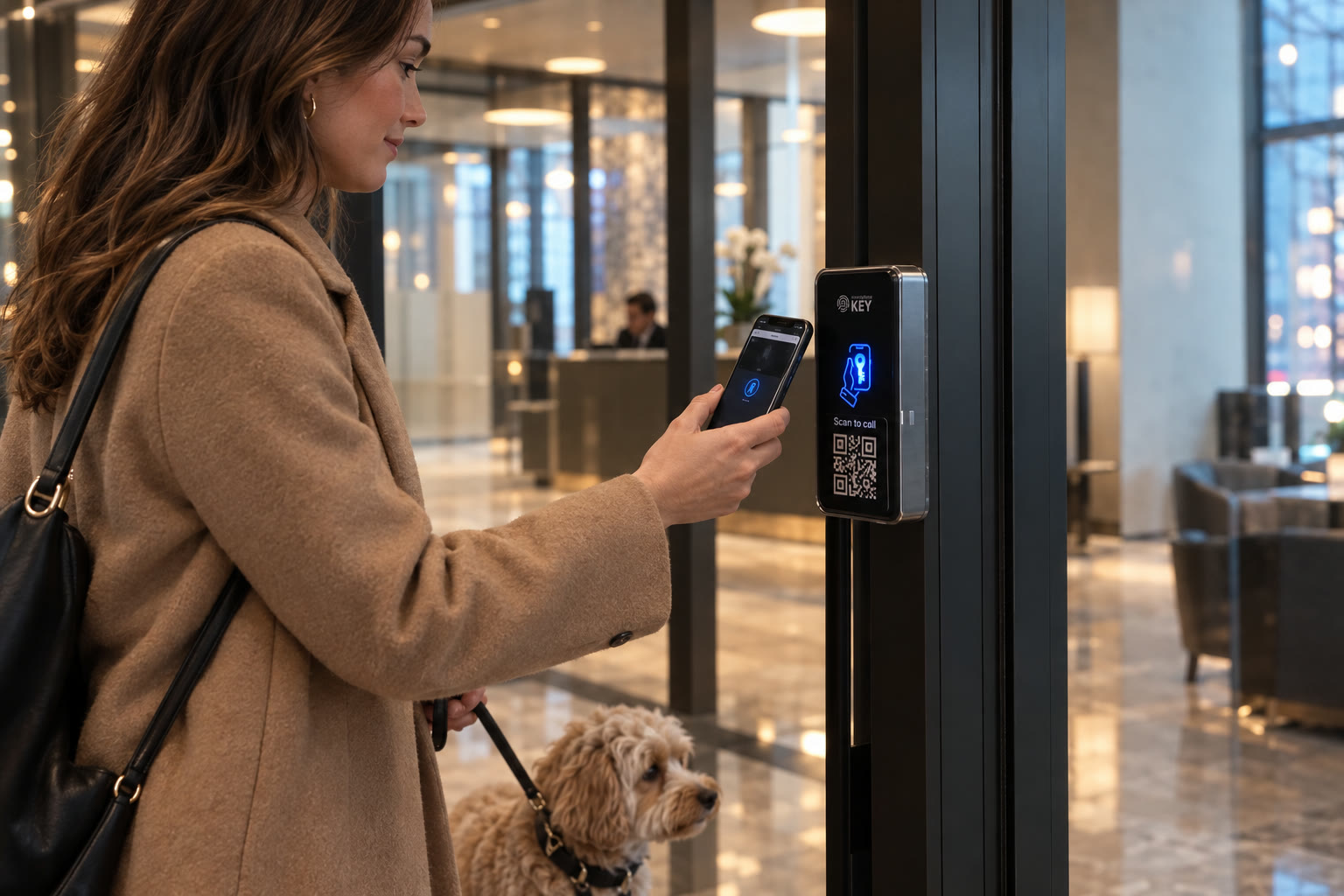
A QR calling and credential reader offers a different arrival arrangement to discuss when reviewing an apartment buzzer system. It does not establish the cause of an existing fault or compatibility with every panel, handset or release circuit. Start with the observed problem and ask the assessed proposal to identify the equipment and operating changes.
Example, not a completed project
The call reaches somebody, but the release does not behave as expected.
Imagine a reported arrival where contact with a resident succeeds but the door does not release as expected. Give the assessor that sequence without naming a failed component you have not verified. Ask how the proposed scope handles the existing condition alongside any calling change. This is an example problem brief, not a fault diagnosis, wiring direction or promise that a new panel resolves the physical release.
A useful replacement comparison
Separate what you observed from what the proposal would change.
Clear starting information helps the responsible contacts compare repair investigation, retained equipment and a new arrival routine without treating every entrance problem as one product purchase.
Describe the present arrangement
- Explain where the visitor stands and what happens at each step. Note whether the problem concerns finding a recipient, making contact, releasing the door or closing afterward. These observations support assessment without claiming that the caller has identified an electrical fault remotely.
- Inventory the panel, answering equipment, release and any separate credential reader. Include what still works and whether a particular entrance differs from another. A proposed change should not make useful existing functions disappear from the conversation before their relationship has been reviewed.
- Identify the responsible owner or manager and any service contact already involved. Arrange permission to inspect the relevant opening and spaces. A unit resident can introduce a symptom while decisions about common equipment remain with the party authorized to act on it.
Ask what will be different
- Review the documented phone-and-QR visitor interaction with the intended recipients. Confirm which existing panel or indoor functions remain, change or are unverified. Similar calling purposes do not establish that a new route reproduces every operation residents currently use.
- Discuss instructions and authorized entry during the proposed work after the physical scope is known. Identify who helps occupants and visitors through the change. A replacement enquiry should not be treated as permission to disconnect an existing working entrance route before the transition is agreed.
- Compare the new equipment and visitor experience with any separate fault investigation or door correction. Include supply, connection, handover and continuing charges. Keep excluded or unanswered items explicit so a successful call demonstration does not stand for resolution of every previous symptom.
Replace the right problem
Separate equipment faults from arrival rules.
A buzzing panel, a missed call and an unmanaged key list are different complaints. Describe the current problem before deciding that all entrance equipment must be replaced.
01Record what is installed
Identify the entrance panel, indoor answering arrangements, powered release and any separate credential system. Describe which parts still work and which fail. The inventory helps scope an assessment; it cannot establish the condition of concealed wiring.
02Choose the visitor experience
Compare the present button or handset routine with the documented QR calling approach. Include how guests find the recipient and what management wants to happen when nobody answers. A different calling method should be understood before a working route is removed.
03Plan the physical transition
Ask the assessor to identify retained hardware, required lock or power work and access while the entrance is being changed. The replacement needs a handover for residents and administrators, not merely a demonstration that one credential releases the door.
SmartphoneKey materials establish QR calling and managed credential options. This replacement worksheet does not diagnose a buzzer, promise a repair for unidentified equipment or confirm that old circuits and handsets can be reused.


Start with observations, not a diagnosis
Show which parts work and where the difficulty appears.
Describe finding the recipient, making contact, requesting release and the door's closing behaviour as separate steps. Show the existing equipment with the responsible property contact. The assessor can establish which questions concern a different calling experience and which need investigation of the current assembly. A replacement overview cannot identify an unexplained electrical or mechanical fault at an unfamiliar entrance.
Is it the right fit?
Is the proposed change tied to a clearly described problem?
Useful with an equipment inventory and authorized review
- The buzzer is old, unreliable or hard to update.
- Fobs keep going missing and move-outs mean chasing keys.
- The owner, manager or board can approve the change.
Establish these physical and panel requirements first
- You need a voice panel with a button for every unit.
- The entrance can’t take an electric lock and low-voltage power.
Before comparing a replacement proposal
Keep the original problem and the intended change visible.
A different calling method and a repaired door are different outcomes. Ask what the proposal addresses and which existing condition still requires attention from the responsible professional.
Does this page diagnose a faulty buzzer?
It describes an alternative entry approach, not a remote fault diagnosis. Tell the responsible service professional about the actual equipment and symptom. A replacement feature list does not identify the cause of an unexplained electrical or mechanical problem.
Must the whole old system be removed?
That decision follows assessment of the actual parts and intended visitor route. Ask which equipment remains usable, what is replaced and how residents enter during the change. Do not assume every existing component is either compatible or unnecessary.
Can visitors still call without installing an app?
The manufacturer describes a QR code scanned with a phone camera to place the visitor call without a separate app installation. The proposed recipient arrangement and an alternative for someone unable to use that route still need planning.
Does replacing the panel cure a door that sticks?
Not by itself. Closing, alignment and latch issues need to be identified separately. A reader recognizing permission cannot make an unsuitable mechanical assembly function correctly.
How should common-building approval be handled?
Identify management or the responsible owner before changes to shared equipment are agreed. A person who occupies one room or unit may not control the lobby panel, its release circuit or common locking hardware.
What must the fallback cover?
Include an unanswered request, an unavailable visitor phone, connection interruption and loss of power. These do not necessarily share one remedy. Confirm the installed entrance response rather than give a blanket promise that a replacement never leaves visitors waiting.
What helps describe a problem that only happens sometimes?
Give the observed sequence, affected opening and the step that behaved differently. Explain which current functions still worked, without including personal caller details in this preview. Ask the responsible professional to investigate the actual equipment rather than assume an intermittent symptom identifies one component or proves a replacement will cure it.
Should a repair investigation and a visitor-system replacement be treated as the same scope?
Ask the proposal to distinguish them. Investigation concerns the existing condition, while a replacement may change the way visitors contact a recipient and regular users enter. Identify what each part includes and any retained equipment or door correction. This page does not establish a repair offering for every unidentified buzzer or combine those jobs automatically.
Next step
Start with the entrance.
Tell us what’s on the door today and roughly how many units. The door check comes first; cost follows.
Request a door checkRequest a scope that addresses the stated problem
Identify existing equipment, retained and replaced parts, the proposed visitor route and physical release work. Keep separate diagnosis or correction, supply and connection requirements, user instructions and continuing charges visible. Unverified handset or wiring reuse should stay an explicit question.
For the Toronto/GTA review, arrange the authorized premises contact and someone able to describe the observed difficulty. Discuss access to the opening and equipment before a visit is confirmed. This preview books no repair and authorizes no disconnection.